


ProtoCXR: Quantitative Interpretability for Prototype-Based Chest X-Ray Classification
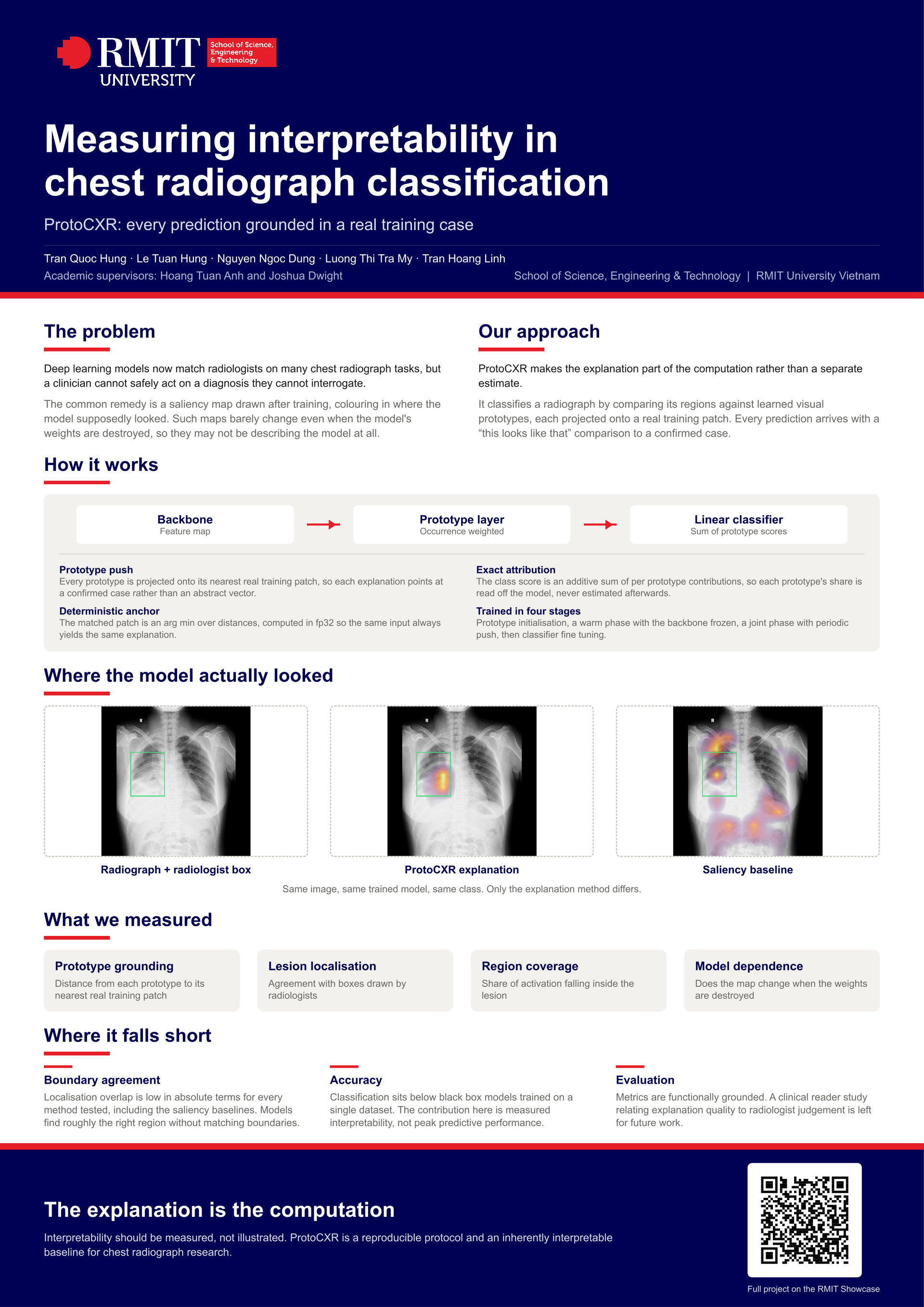
Deep learning models can now compete with radiologists on many chest radiograph tasks, but a clinician cannot safely act on a diagnosis they cannot question. The most common solution is to draw a saliency map after training that shows where a model supposedly looked. Such maps change very little even when the model's weights are destroyed, so they may not accurately reflect the model.
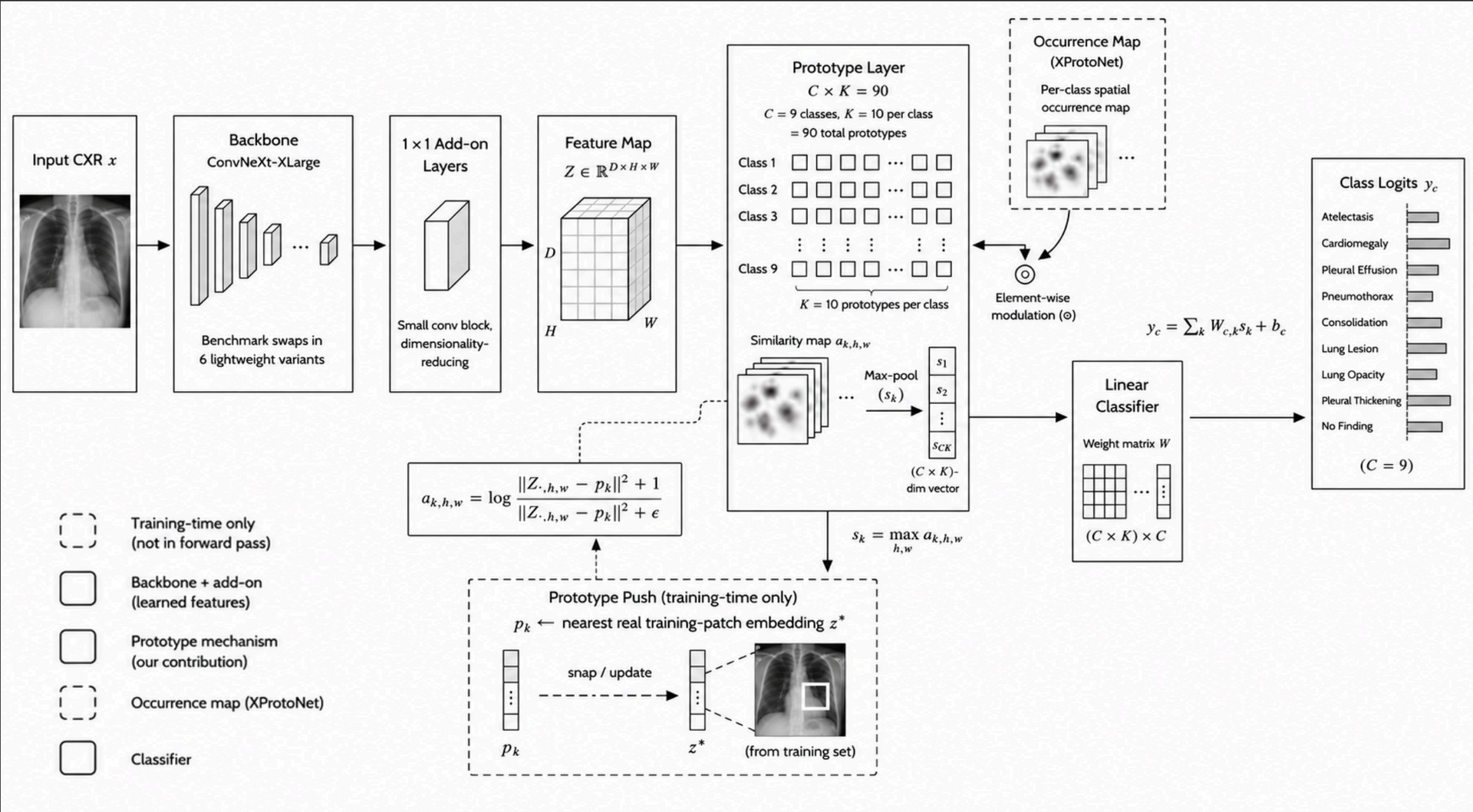
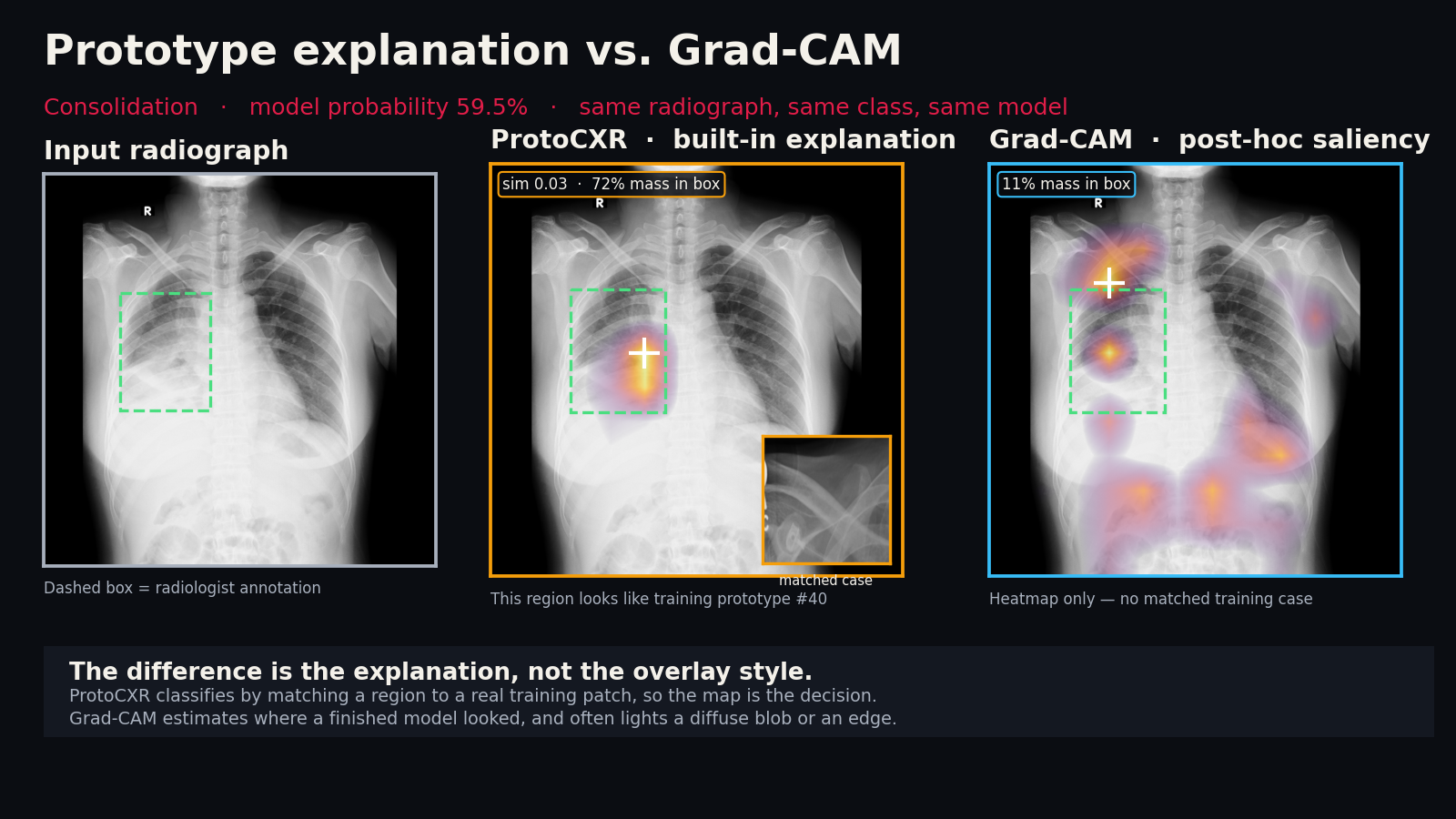
ProtoCXR takes a different approach: the explanation is the computation. It classifies a radiograph by comparing its regions to learned visual prototypes, which are projected onto a real training patch. Every prediction begins with a "this looks like that" comparison to a confirmed case, rather than an explanation estimated later.
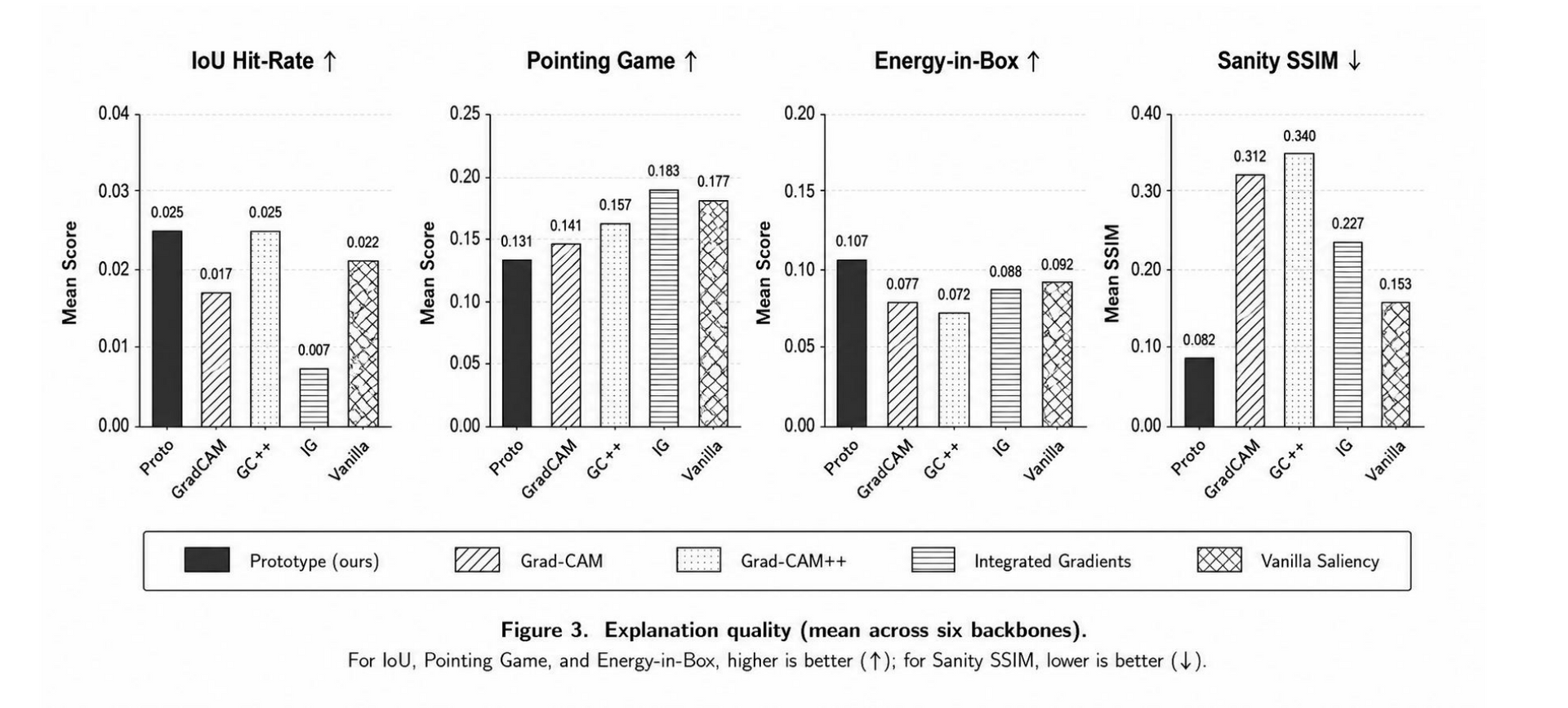
Interpretability should be measured, not demonstrated. We trained ProtoCXR on a corpus compiled from four public datasets into a single taxonomy of thoracic findings, then assessed the explanations themselves: how tightly prototypes anchor to real image patches, how well they land on radiologists' marked lesions, and whether they truly rely on the trained model. These explanations are compared to four saliency baselines using identical models, metrics, and annotations across six backbones.
The end result is a reproducible protocol and an easily interpretable baseline for future chest radiograph work.
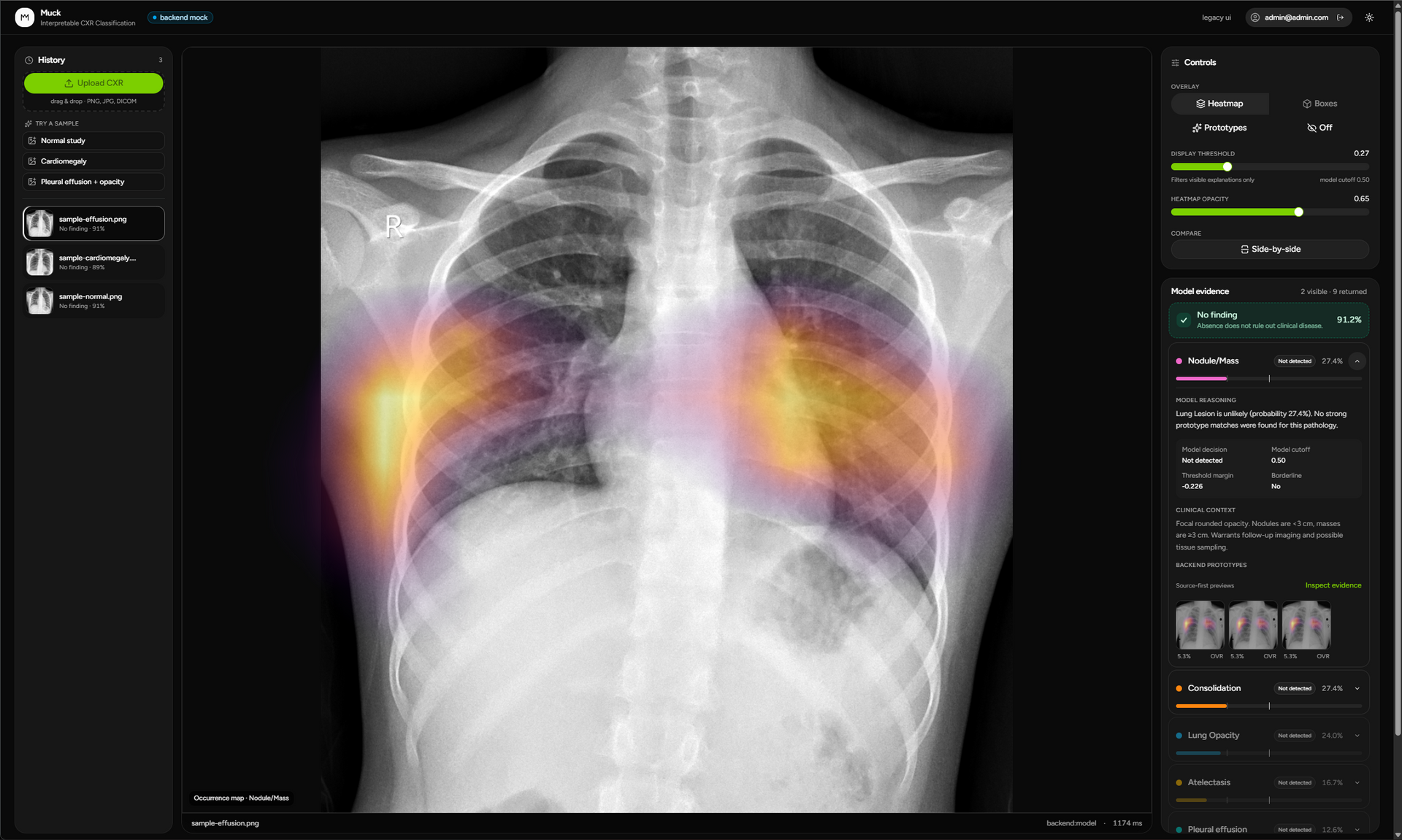
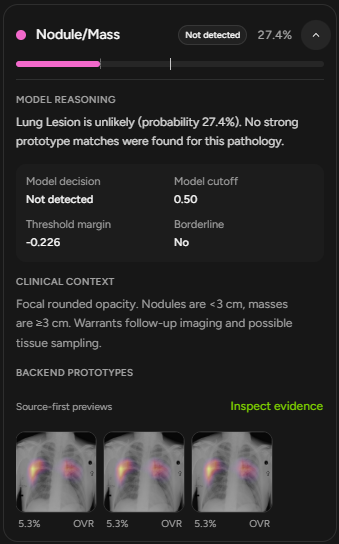
Project Snapshots